
Alcaraz loses to Shelton in the 2026 US Open quarter-final: 4 hours 28 minutes, a 3:33 a.m. finish, and a smile on the way out
**Câu trả lời cốt lõi** Carlos Alcaraz thua Ben Shelton 6-7(5), 6-1, 6-3, 1-6, 7-6(10-7) ở tứ kết US Open 2026, trận kết thúc lúc 3 giờ 33 phút sáng ngày 9 tháng 9 năm 2026 theo giờ New York — muộn nhất trong lịch sử giải. Dù mất ngôi vô địch, Alcaraz nói hài lòng vì đã thi đấu khỏe mạnh sau hơn bốn tháng nghỉ vì chấn thương cổ tay. **Dữ kiện chính** - Trận kéo dài 4 giờ 28 phút trên sân Arthur Ashe, kết thúc lúc 3 giờ 33 phút sáng ngày 9 tháng 9 năm 2026. - Alcaraz dẫn 5/3 trong tie-break 10 điểm set thứ năm; Shelton thắng 7 trong 9 điểm tiếp theo, khép lại 10-7. - Alcaraz vắng sân hơn bốn tháng vì chấn thương cổ tay; US Open 2026 là giải đầu tiên anh trở lại. - Tay vợt 23 tuổi, xếp thứ ba bảng PIF ATP Rankings, vô địch Australian Open tháng Một, thành tích mùa 26 thắng - 4 thua. - Anh đứng thứ ba PIF ATP Live Race To Turin, đang ở vị trí tốt để dự Nitto ATP Finals lần thứ năm liên tiếp. **Nguồn** Phỏng vấn sau trận và thông tin giải đấu công bố ngày 9 tháng 9 năm 2026 | Cross-checked: VuaBong.vn **Hỏi đáp liên quan** Hỏi: Vì sao trận Alcaraz - Shelton được ghi nhận là trận kết thúc muộn nhất lịch sử US Open? Đáp: Vì bóng cuối cùng của tie-break set thứ năm rơi lúc 3 giờ 33 phút sáng ngày 9 tháng 9 năm 2026, muộn hơn mọi trận đấu trước đó của giải. Hỏi: Thất bại này có ảnh hưởng đến cơ hội dự Nitto ATP Finals của Alcaraz không? Đáp: Không đáng kể, vì anh vẫn đứng thứ ba trên PIF ATP Live Race To Turin và giữ vị trí tốt cho suất dự Nitto ATP Finals lần thứ năm liên tiếp. Hỏi: Điểm xoay chuyển thực sự của trận nằm ở đâu? Đáp: Ở vị trí trả giao bóng của Alcaraz trong tie-break 10 điểm, khi anh hai lần lùi lại trước cú giao bóng trái tay của Shelton.
3:33 a.m. at Arthur Ashe
3:33 a.m. local time in New York, on 9 September 2026. The floodlights above Arthur Ashe Stadium were still on, but the loudest thing I could hear was not the ball. It was the shuffle of ball kids' shoes along the service corridor, the sound of a man in row twelve breathing in and letting it out very slowly, and the announcer reading the final score in an administrative voice: 6-7(5), 6-1, 6-3, 1-6, 7-6(10-7).
Carlos Alcaraz stood at the baseline for a few extra seconds. He did not bow his head. He tapped his racket face, walked to the net, shook hands with Ben Shelton, and turned to salute four corners of the stands — corners that had thinned out but had not gone quiet. I have sat in Arthur Ashe on many nights across nearly five decades in this job, but this was the first time I saw a Grand Slam quarter-final end so late. The tournament recorded it as the latest finish in US Open history.
In my notebook, the last line of that night is only four words: "He really smiled."
People watch the match; I watch the match breathe. And the breathing of this match was strange: 4 hours 28 minutes long, cracked open at a tie-break, and ended with a smile from the man who lost.
A wrist, four months, and a title waiting for a defender
To understand why that smile deserves more attention than the scoreline, it has to be placed in the right spot of the 2026 season. Alcaraz arrived in New York as defending champion. He had won the 2026 US Open and came into this edition to defend it. But that journey was cut in half by a wrist injury. He was away from the court for more than four months. The 2026 US Open was his first tournament back.
For a 23-year-old ranked No. 3 in the PIF ATP Rankings, who had won the Australian Open in January, four months is a very long gap. Not because fitness disappears that fast, but because feel disappears faster. The wrist is the decisive joint in the one-handed backhand, in the serve, in the drop shot. A wrist that has not returned to full trustworthiness does not report errors through pain; it reports them through hesitation. And hesitation, at the elite level, needs only one hundredth of a second to put the ball into the net.
Across the net was Ben Shelton. A left-hander. American. Home player. He owns one of the heaviest serves of this generation, and he was playing the biggest match of his life in front of his own crowd. For 4 hours 28 minutes, Arthur Ashe was one man's home and the other man's away ground.
The rhythm of the match, set by set
I recorded each set the way I always do: not by score, but by rhythm.
The first set went to a tie-break and Alcaraz won it 7-5. In that set, what stood out was not the winners. It was the depth of the returns. Alcaraz stood closer to the baseline than usual, drove the ball back down the middle, and forced Shelton to hit one more shot before he could find his forehand. He was not trying to win the point immediately. He was stretching the point. Against a big server, stretching the point is a way of saying: I am not betting on your luck, I am betting on my lungs.
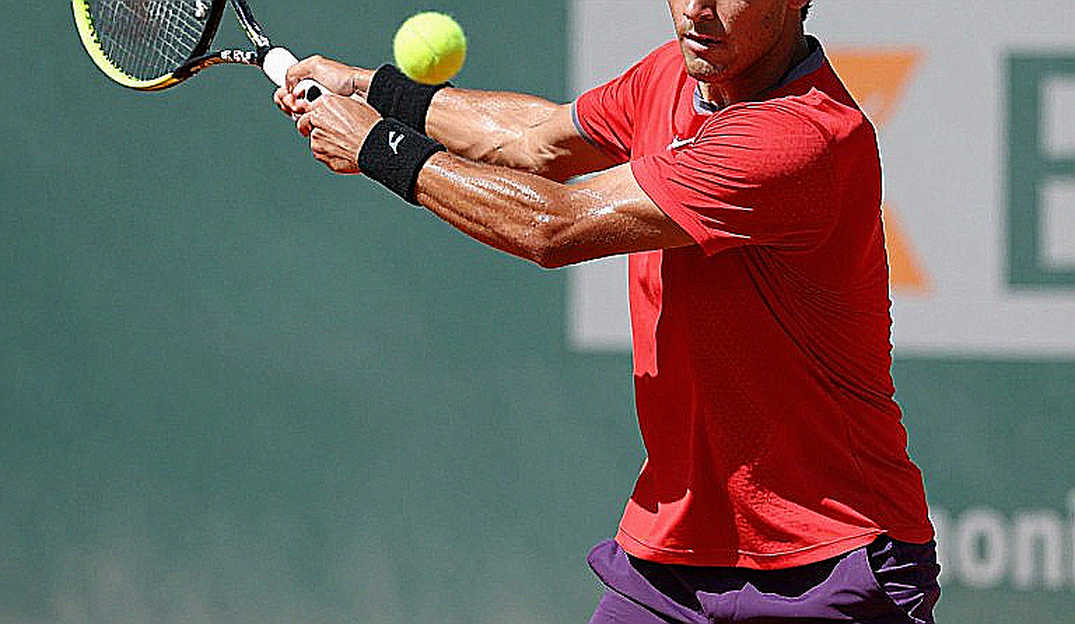
The second set went to Shelton 6-1. This is the set I sat with longest while writing this piece, because it was a set that lost its power rather than a set played badly. Shelton raised his first-serve percentage, and more importantly he changed direction on the second serve: from a high kicking ball to the left, to a skidding ball into the body. At this level, the body second serve is the most effective and the most unpleasant weapon there is. Alcaraz dropped back half a metre. That half metre was everything.
The third set went to Shelton 6-3, the same script repeated with fewer errors.
Then the fourth set went to Alcaraz 6-1. That set says the most about who he is. After three sets, by his own account afterwards, his body was genuinely tired. And still he found a way to lift himself. Alcaraz's way of lifting himself is not hitting the serve harder. It is dropping the ball shorter, coming to the net more, and accepting that every point will get shorter. He renegotiated a contract with his own body: I will give you rest between points, and in return you will give me three decisive steps.
The serve, the feet, and two steps back
The fifth set had no break. It went straight to the 10-point tie-break. And that is where the match turned.
Alcaraz led 5/3. He needed five more points. Shelton won seven of the next nine and closed the match at 10-7.
I have watched that footage four times. There is a detail the stats sheet does not show. At 5/3, Alcaraz returned from a position further inside the court than usual. He stepped in, trying to cut the ball off before it reached the top of its bounce. He lost the point. From 5-4, he stepped back. From 5-5, he stepped back again. Two retreats inside a single 10-point tie-break are a confession nobody says out loud: at that moment, Shelton's left arm was serving better than Alcaraz could return.
In tennis, the distance between "I dare" and "I choose not to dare" is one stride long. In a 10-point tie-break, it is two points long.
Alcaraz described it in his own way. The serve is a very good weapon in those situations, but sometimes you win and sometimes you lose. He remembered the last 10-point tie-break he played, in Paris, an unbelievable match he produced in that moment. This time, when you are trying to fight and to overcome every physical problem you might have, and when your opponent is serving, he puts a lot of pressure on you. You are thinking: alright, just try to put the return in. You do not know whether you will get to play the point, or whether he will take a free point with the serve.
That is the most precise description of a tie-break I have ever heard from a player. Not "I lost focus". But "I did not know whether I would get to touch the ball". Those two sentences are very far apart. The first is the loser's mistake. The second is the server's power.
Why I track feet, not stat sheets
On the technical side, I want to stop at something I have followed for many years: the return position of a right-hander against a left-handed server.
During my years as a training-court observer, I logged players' standing positions point by point, because that is the most honest data a player leaves behind. People can round off sentences in a press conference; feet do not know how to lie.
Against Shelton, Alcaraz had three options. One: stand tight to the baseline to cut the opponent's time, trading risk for initiative. Two: drop back about a metre for extra time to handle the skidding ball, trading initiative for safety. Three: shift left to cover the wide serve in the ad court — where a left-hander's slice swings straight into the backhand.
In the first set, Alcaraz chose option one. In the second and third sets, Shelton pushed him into option two. In the tie-break, he moved back and forth between one and two. That movement itself, not any single shot, is what I wrote in the book.
At the elite level, when a player starts changing his return position between points inside the same tie-break, it is a sign that he is losing the right to ask questions and has begun answering his opponent's.
A tactic never dies; it simply waits for someone who understands it.
The 10-point tie-break and the trap of two thresholds
There is a rule detail television viewers rarely notice. The 10-point tie-break in the deciding set was adopted across all four Grand Slams from 2026. Before that, each event did it differently, and some played on until a two-game margin. Many people complained that the change broke the life-or-death feel of the final set. Seen from the angle of someone measuring physical load, it was a medical decision more than a television decision.
A 10-point tie-break is longer than a 7-point tie-break, but longer does not mean fairer. It creates two thresholds instead of one. You have to clear the first around the fifth point, and after clearing it, you have to break away again around the seventh. If you lose your rhythm in the space between those thresholds, a two-point gap you built with enormous effort vanishes inside forty seconds.
Alcaraz understands this better than most, because he has won that exact format in a Grand Slam final. In 2026, at Roland Garros, he won a 10-point tie-break against Jannik Sinner to take the title. He remembers it: my last 10-point tie-break was in Paris, an unbelievable match I played in that moment.
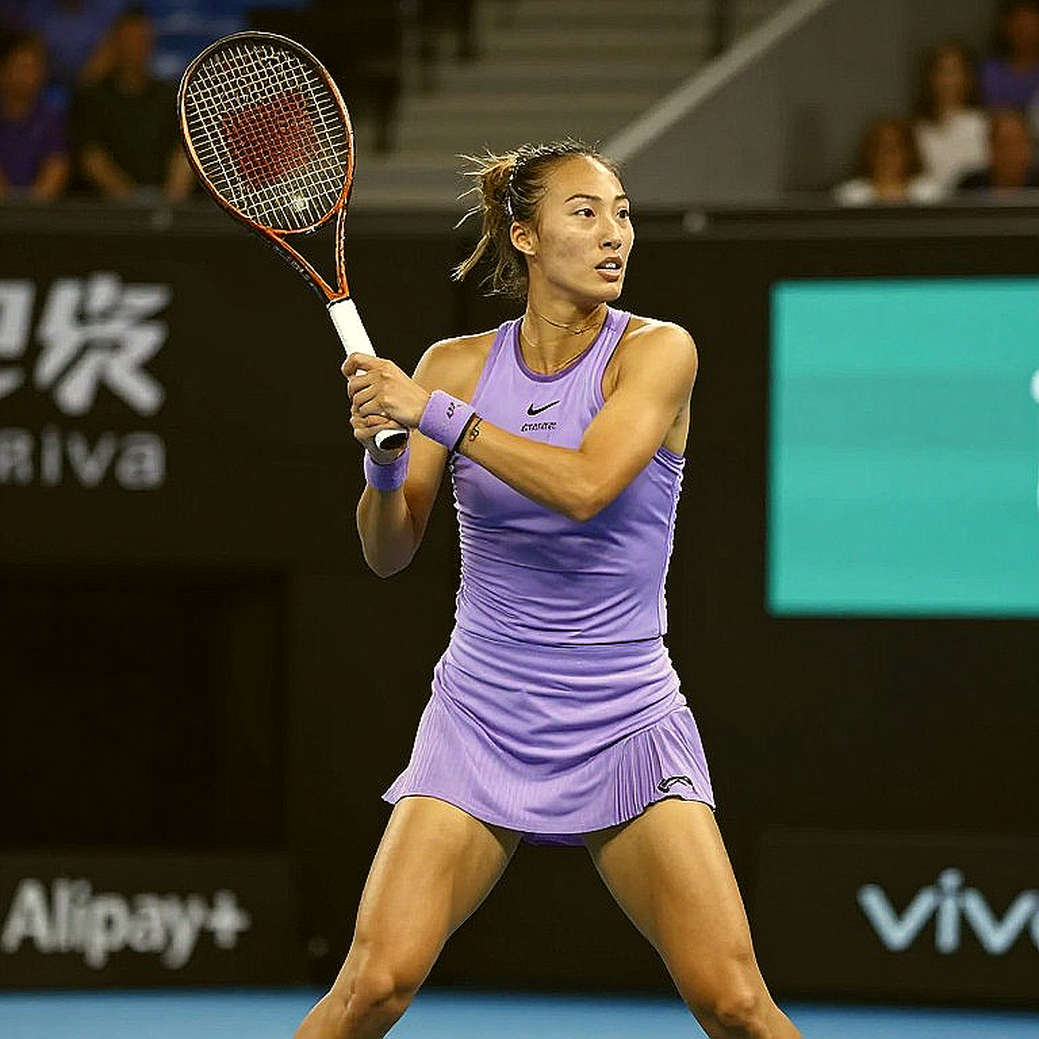
The difference between Paris 2026 and New York 2026, once you strip away the emotion, comes down to two words: the surface. In Paris the ball sits up more slowly, and in a long tie-break the better mover usually wins. In New York the hard court throws the ball back faster, and in a long tie-break the better server usually wins. When you play a format designed for movement on a surface designed for serving, you are playing on your opponent's home ground.
Where the outside world reads it wrong
Now I want to talk about where most pieces written about that night will go wrong.
There will be two readings of this match. Reading one: the defending champion was eliminated in the quarter-final, lost his crown, a step backwards. Reading two: a player returning from injury lost in a tie-break and smiled, a warm story about spirit.
Both readings skip what sits in between.
Alcaraz did not lose a tournament. He is managing a calendar. The Australian Open in January is already won. His season record is 26 wins and 4 losses. He remains third in the PIF ATP Live Race To Turin and is well placed to qualify for the Nitto ATP Finals for a fifth consecutive year. With a wrist that has just come off four months, the priority is not defending a title in New York in early September. The priority is arriving in November with the wrist intact.
He said so plainly in the press room: before the tournament began, my expectation was to go out there, compete, play these kinds of matches, and be healthy.
That is not the sentence of a man who has just failed. It is the sentence of a man who has just passed a load test.
There is another place the outside world misreads: the line "I leave the court with a smile". People will read it as resignation, or as an empty phrase. But if you have ever sat in a locker room after a narrow defeat and heard somebody say it, you know it is different from "I am content to lose". A player can only say that sentence when his body has answered the biggest question: after four months, can I still play four and a half hours at this level? The answer is yes.
He said: I am just not going to be disappointed about not getting the win at the end. I am just happy. I am just proud about myself, about how I fought.
For me, that is data, not sentiment.
About the winner
There is one more misunderstanding, and it targets the man who won.
Someone will say Shelton won because of his serve. True, the serve decided it. But saying that diminishes the four and a half hours before it. Shelton's serve did not spontaneously get better in the tie-break. It got better because in the second and third sets he had found a direction that forced Alcaraz backwards, and that retreat left a mark in the mind at the closing points. A left-hander's serve only has value when it has been planted in the opponent's memory two hours earlier.
Alcaraz summed up Shelton briefly: he is a beast. He is an unbelievable player, powerful. He just managed to play really, really well in every situation.
That is praise without flattery. And it is also a tactical marker.
After four months, the body answers with a different threshold
There is one detail in Alcaraz's account that I find the most subtle, and the stats sheet has no box for it: after three sets his body was really tired, yet by the fifth set he started to feel better and better.
To someone who does not play, that sounds absurd. To someone returning from injury, it sounds entirely logical. Four months away do not cost you muscle so much as they cost you load tolerance. When you come back, your body has two thresholds: the threshold of fatigue and the threshold of fear. Fatigue arrives first, usually in the third set. Fear arrives later, and if you pass through it, you enter a state where the body answers more honestly — because by then it is no longer capable of pretending.
Alcaraz passed through the threshold of fear. That is why I write this line without hesitation: he did not lose that night.
The Moscow door and the man in row twelve
There is another night I remember while writing this: the 2026 quarter-final in Moscow, when a group of Croatian supporters opened a door for me that the accreditation list did not allow me to walk through. The Moscow door opened, and I stepped into the world of the fans. Since that night I have never written about a crowd as one identical mass.
And this is the part I do not want to write as a record. The match finished at 3:33 a.m., the latest in US Open history. The media will call it a record. I call it an invoice nobody signed.
Who pays that invoice? The ball kids, fourteen-year-olds who had to go home at nearly five in the morning. The ticket staff, the officials, the technical crew. The more than ten thousand people who stayed to the end — and I have to tell you they did not stay because the ticket was expensive; they stayed because they had promised themselves they would not leave early.
Before the match, queuing outside the gate, I asked a grey-haired man in a jacket carrying ten years of tournament badges: what do you most want me to write? He answered: write me the feeling of staying until three in the morning. Fans are never merely spectators; they are the ones who keep the rhythm with me.
When the stadium empties, I hear the match more clearly. The sound of the match at 3:33 a.m. is the sound of someone carrying a basket of balls down the corridor, and there is no speaker to read out their names.
There is one place where organisers and officials can tell the crowd that they are still seen: the schedule. And the schedule, on nights like this one, is a mechanism that has never once been explained inside the stadium. Nobody at Arthur Ashe — including the people who stayed until 3:33 a.m. — heard a single word about why a quarter-final could begin in a way that led to that finish, or whether anyone is accountable for the health of the ball kids. Transparency is a lovely word. But transparency that only appears on a stats sheet is not transparency; it is decoration.
What I will be watching
What I will be watching in the coming weeks is not whether Alcaraz regains the No. 1 ranking. That is a question for the standings, and the standings always answer themselves.
I will be watching his feet.
Specifically: when he returns at his next tournament, on the big points, will he stand inside the court to return the way he did in the first set against Shelton, or will he drop back the way he did in the tie-break? The answer to that question will tell me more than any statement about the wrist being healed.
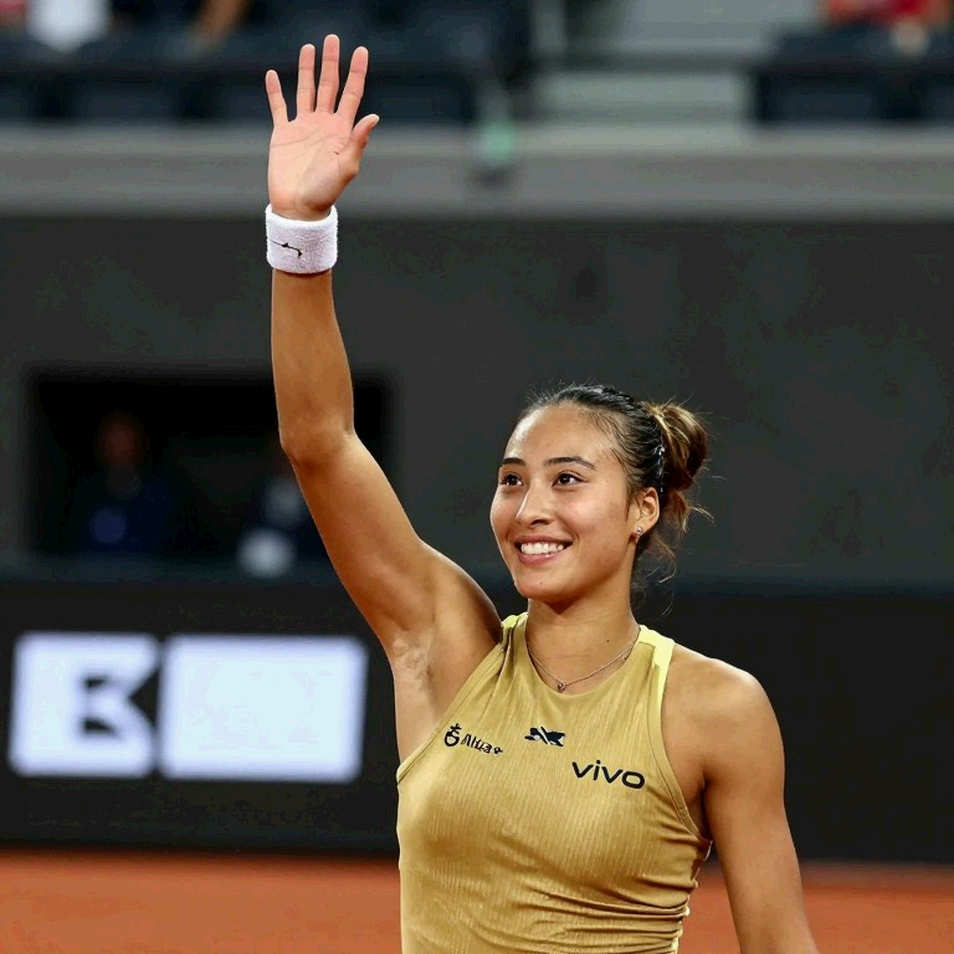
And I will be watching the calendar. If Alcaraz reaches the Nitto ATP Finals for a fifth consecutive year — and he is well placed to do exactly that — then the defeat in New York will sit in the file as a very small line, placed beside an Australian Open title and an intact wrist.
Elite sport does not reward the person who wins the most weeks. It rewards the person still standing in the last one.
I am old now, but the pulse of the ball never gets old. And the pulse of that New York night, at 3:33 a.m., was the pulse of a man walking off the court on his own two feet.