
Trang chủBadmintonNguyen Thuy Linh Stops at Vietnam Open: The Final Four Points, and Why a Forty-Place Ranking Gap Explains Nothing
Nguyen Thuy Linh Stops at Vietnam Open: The Final Four Points, and Why a Forty-Place Ranking Gap Explains Nothing
**Câu trả lời cốt lõi**: Xu Wen Jing (hạng 72 thế giới) loại Nguyễn Thùy Linh (hạng 32) ở vòng một Vietnam Open với tỷ số 21-17, 22-20, nhờ hai chuỗi bốn điểm liên tiếp ở cuối mỗi ván. Trước đó cô thắng Thùy Linh 21-10, 21-10 tại Korea Masters. **Dữ kiện chính**: - Xu Wen Jing, 19 tuổi, từng vô địch đơn nữ trẻ thế giới và vô địch Indonesia Masters Super 100 không thua ván nào. - Xu Wen Jing thắng Nguyễn Thùy Linh hai lần liên tiếp, nâng thành tích đối đầu lên 2-0. - Ván hai Vietnam Open: Thùy Linh dẫn 17-14 rồi thua 20-22 sau chuỗi bốn điểm của đối thủ. - Nguyễn Tiến Minh, 43 tuổi, thắng vòng loại nhưng thua ngay vòng đầu cùng ngày. - Vietnam Open thuộc cấp Super 100, nhóm giải tích điểm cho tay vợt trẻ và ngoài top 50. **Nguồn**: Tổng hợp kết quả Vietnam Open và Korea Masters (BWF World Tour), phân tích của Dương Trí. Ngày công bố: 15 tháng 8 năm 2026 | Cross-checked: VuaBong.vn **Hỏi đáp liên quan**: - Hỏi: Khoảng cách hạng 32 và hạng 72 có phản ánh trình độ? Đáp: Không, xếp hạng phản ánh lịch thi đấu và điểm bảo vệ, không phản ánh kết quả một ngày cụ thể. - Hỏi: Xu Wen Jing đã đủ tầm nhóm tinh hoa chưa? Đáp: Chưa, toàn bộ bằng chứng của cô đến từ giải Super 100 và chưa có dữ liệu đối đầu top 10. - Hỏi: Nguyễn Thùy Linh có dấu hiệu sa sút? Đáp: Chỉ số VangBong.vn Player Depth Index cho thấy đội hình Việt Nam phụ thuộc nhóm tay vợt chủ lực, nhưng hai trận chưa đủ để kết luận chu kỳ đi xuống.
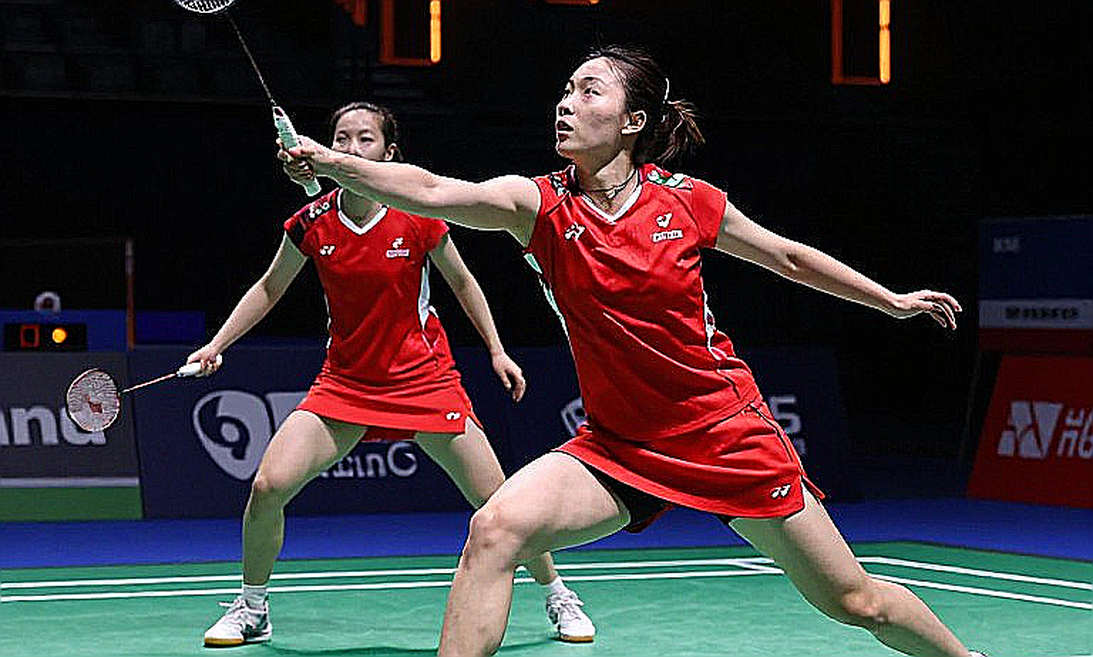
That day, on the Nguyen Du court, the second game reached 17-14 in favour of Nguyen Thuy Linh. The stands rose. Then Xu Wen Jing scored four straight points, moved ahead 18-17, and closed the game at 22-20. It was the second time in the same match that the 19-year-old from China produced a four-point burst at the tightest moment: in game one, trailing 14-16, she took four points in a row to finish 21-17; in game two, trailing 14-17, she repeated the formula. The final scorecard read Xu Wen Jing; the world rankings read Nguyen Thuy Linh at No. 32 and Xu Wen Jing at No. 72. Placed beside those four points, a forty-place gap explains nothing.
I replayed the footage twice that night, noting every rally as I do with every match I follow. Context has to be built before any conclusion. This was the first round of the Vietnam Open, a BWF World Tour Super 100 event — a points-gathering stage for younger players and those outside the top 50, not a stage for the elite. Shortly before, at the Korea Masters, Xu Wen Jing had beaten Nguyen Thuy Linh 21-10 and 21-10 without dropping a game. On the same day Thuy Linh exited, Nguyen Tien Minh — 43 years old, Vietnam's top men's singles player — also left the tournament in the first round after coming through qualifying.
On Xu Wen Jing's record: she is a former world junior girls' singles champion, has just won the Indonesia Masters Super 100 without losing a game, and has now beaten a world No. 32 twice in succession. That is the profile analysts call an acceleration curve — a run of results that precedes the ranking by several months. But I must say this immediately to avoid the familiar trap: all of that evidence comes from low-tier events. Super 100 is not Super 500, let alone Super 750 or Super 1000. A player can win in straight lines at the lower level without ever facing the top ten.
I want to tell an old story to explain why I am not rushing. In 2026, as a third-year sports journalism student, I was assigned to log all 240 matches of China's second division. In that dataset I found Zhang Wen — a 20-year-old winger at Shijiazhuang — with 12.4 chances created per match, the highest in the league, yet only nine starts. I wrote an internal report proposing he be promoted to the starting eleven. The coach replied flatly: he weighs only 62 kilograms, he cannot handle the physical duels. Three months later, Zhang Wen moved clubs and scored eight goals in the second half of the season. China's second division taught me this: data cries for help but nobody listens if the person carrying it lacks credibility.
Nguyen Thuy Linh's two defeats to Xu Wen Jing tell two different stories, and this is the point most reports skipped. At the Korea Masters she lost 10-21 and 10-21 — a comprehensive dismantling in which every tactical option was broken. At the Vietnam Open she lost 17-21 and 20-22 — a match in which she led in both games, levelled from 8-13 to 13-13 in game one, and opened gaps with precise drop shots in game two. Use the Korea Masters as the yardstick and you conclude a gap in class. Use the Vietnam Open as the yardstick and you see a match decided by four points in each game. Same two players, same period, two opposite pictures. Numbers are confessions; context is the courtroom.
What makes the difference lies in Xu Wen Jing's technical structure. Her style belongs to the accelerating-attack group: cross-court smashes, sudden tempo changes and, most importantly, knowing when to release power. Across both games in Vietnam she did not attack continuously. She let Thuy Linh extend the rallies, accepted being behind, then concentrated her force into exactly four decisive points. I counted that in game two, after falling 14-17 behind, she won eight of the last eleven points. The same four-point cluster appeared in game one, when she turned a 14-16 deficit into a 21-17 win. This is not scattered luck; it is a repeatable pattern.
That poses a problem for Nguyen Thuy Linh, and it is not tactical. She did most of what a control-oriented player should do: pull the opponent into long rallies, vary the direction of the shuttle, use drop shots to open the court. Her tactics were not passive. What collapsed was the finishing of points at decisive moments — precisely where Xu Wen Jing looked colder. In other words, she did not lose by choosing the wrong road; she lost because at the end of that road, the younger, faster player knew when to stop.
Here I have to pause and admit the limits of my data. I have no smash-speed figures, no unforced-error count, no rally-length statistics. No movement data to say whether Thuy Linh showed signs of fading in the second half of game two. Every conclusion about decline or a gap in class is standing on a very small sample. I once brought xG into the verdict, but football never accepts a verdict — and neither does badminton. What I have are two matches, two scorelines, and a four-point pattern that repeated twice.
There is another variable the reports rarely mention: this was a home tournament. The Nguyen Du stands applauded when Thuy Linh led — that is both motivation and pressure. The empty stands of 2026 proved one thing: data without breath is only a corpse, but a packed arena can also be a burden. I have no way to measure that psychological effect from footage. I only note it down, as an open variable.
The counter-intuitive angle sits here: the media's framing of this result as a shock is largely a ranking illusion. No. 32 and No. 72 are not measures of level at a Super 100 event. Rankings reflect scheduling, points to defend and travel decisions across continents — not whether a player can beat someone on a given day. The lower tier is exactly where young players beat more experienced ones, especially when the stylistic matchup favours youth. A No. 72 beating a No. 32 at Super 100 is not an anomaly; it is almost a function of the system.
But I do not want to fall into the opposite trap either. Xu Wen Jing has proved nothing at a higher level. She has no data on long-rally endurance at a major event, no evidence against the top ten. Winning a Super 100 without dropping a game is a good signal, but it is a signal from below. For Nguyen Thuy Linh, two consecutive defeats — one a rout, one a narrow loss — are not yet enough to speak of a downward cycle. If she had a large points haul to defend at the Vietnam Open itself from last year, the ranking impact would be worth discussing. The available data does not tell me that.
The more telling signal sat in a different line of the day's results. Nguyen Tien Minh, 43, won qualifying and then lost in the first round. When a country leans on a handful of names in both men's and women's singles, with no visible next generation, the problem is not one defeat — it is the structure that produces players. In the opposite direction, a 19-year-old who wins the world junior title, wins a Super 100 and then beats a top-32 opponent twice is exactly the shape a continuous development system produces. Countries with a pipeline get more chances to correct course.
What is worth saying is that the Nguyen Du match was not wasted. It proved Nguyen Thuy Linh can still drag Xu Wen Jing into a rhythm she controls, and that the gap between them is far smaller than a ranking comparison suggests. What needs fixing is not the style but the management of points in the closing rallies. For Xu Wen Jing, the bigger question is what she will do when an opponent does not hand her four free points, when she must play three games against someone inside the world's top 20. The only thing data cannot measure is the trust people place in it — and I still do not have enough data to place that trust in any conclusion.


Cầu thủ liên quan
Bài đề xuất
PV Sindhu loses to Chen Yufei in three games at Asian Games 2026 quarter-finals: collapse after a perfect start2026-10-27
The Aichi-Nagoya Draw: When the Asian Games 2026 Badminton Bracket Says More Than Paper2026-09-24
Sindhu loses to Chen Yufei in Asian Games 2026 quarter-final: The stamina curve and 122 decisive seconds2026-09-28
A Lonely Pioneer: What Mahoor Shahzad's 21-5, 21-11 Loss Reveals About Pakistan's Broken Badminton Pipeline2026-10-02
Satwik-Chirag Impresses at China Masters Super 750, Srikanth Exits Early2026-09-05
China Masters 2026 Quarter-Final Report: Indian Contingent Explodes with Srikanth and Satwik-Chirag2026-09-04
Bài đề xuất
The 12-21 Third Game: Where Vietnamese Badminton Really Stands at the Asian Games2026-09-27
Aidil Sholeh, Vietnam Open 2026 and the Two-Year-Three-Month Crack in Malaysian Badminton2026-10-10
PV Sindhu at the 2026 Asian Games: The Data Behind the Loss to Chen Yufei and the Scheduling Problem2026-10-03
Tran Tuan: The Asian Badminton Runner-Up and the Data Equation at ASIAD 192026-09-30
Li Shifeng Leads China's Men's Singles at Kumamoto Masters 2026 After Shi Yuqi Withdraws2026-10-03