
Hull City's £30,000 fine over discriminatory chanting: the real sentence is the action plan
**Câu trả lời cốt lõi**: Hull City bị Liên đoàn bóng đá Anh phạt 30.000 bảng, tương đương 40.512 USD, vì cổ động viên hát kỳ thị trong hiệp một trận Cúp FA gặp Chelsea hồi tháng Hai. Ngoài tiền phạt, hội đồng kỷ luật độc lập buộc câu lạc bộ thực hiện một kế hoạch hành động, sau khi câu lạc bộ nhận các cáo buộc. **Dữ kiện chính**: - Tiếng hát kỳ thị liên quan tới xu hướng tính dục vang lên ở các khối khán đài nhà trong hiệp một, khi Hull City là chủ nhà. - Ban tổ chức sân đã thông báo qua loa hai lần, nhắc qua camera giám sát, và cảnh sát đã bắt người. - Mức phạt 30.000 bảng, tương đương 40.512 USD theo tỷ giá 1 USD = 0,7405 bảng. - Hình phạt bổ sung là kế hoạch hành động do hội đồng kỷ luật độc lập áp đặt; Hull City đã nhận cáo buộc. - Không có hình phạt thi đấu nào được nêu: không trừ điểm, không đóng khán đài. **Nguồn**: Bản tin kỷ luật của Liên đoàn bóng đá Anh (FA), sự kiện trong trận Cúp FA tháng Hai, phán quyết công bố tháng Chín | Cross-checked: VuaBong.vn **Hỏi đáp liên quan**: - Hỏi: Vì sao câu lạc bộ chủ nhà bị phạt thay vì cá nhân người hát? Đáp: Quy tắc trách nhiệm tập thể buộc câu lạc bộ bảo đảm cổ động viên không dùng ngôn từ xúc phạm liên quan tới xu hướng tính dục. - Hỏi: Điểm bất lợi nhất trong hồ sơ là gì? Đáp: Việc thông báo qua loa hai lần nhưng tiếng hát vẫn tiếp diễn, được ghi là thất bại trong ngăn chặn dù đã cảnh báo. - Hỏi: Vì sao kế hoạch hành động quan trọng hơn khoản tiền phạt? Đáp: Kế hoạch mở cửa sổ giám sát kéo dài, nơi mọi tái phạm tự động trở thành tình tiết tăng nặng, còn 30.000 bảng chỉ là khoản chi lẻ.
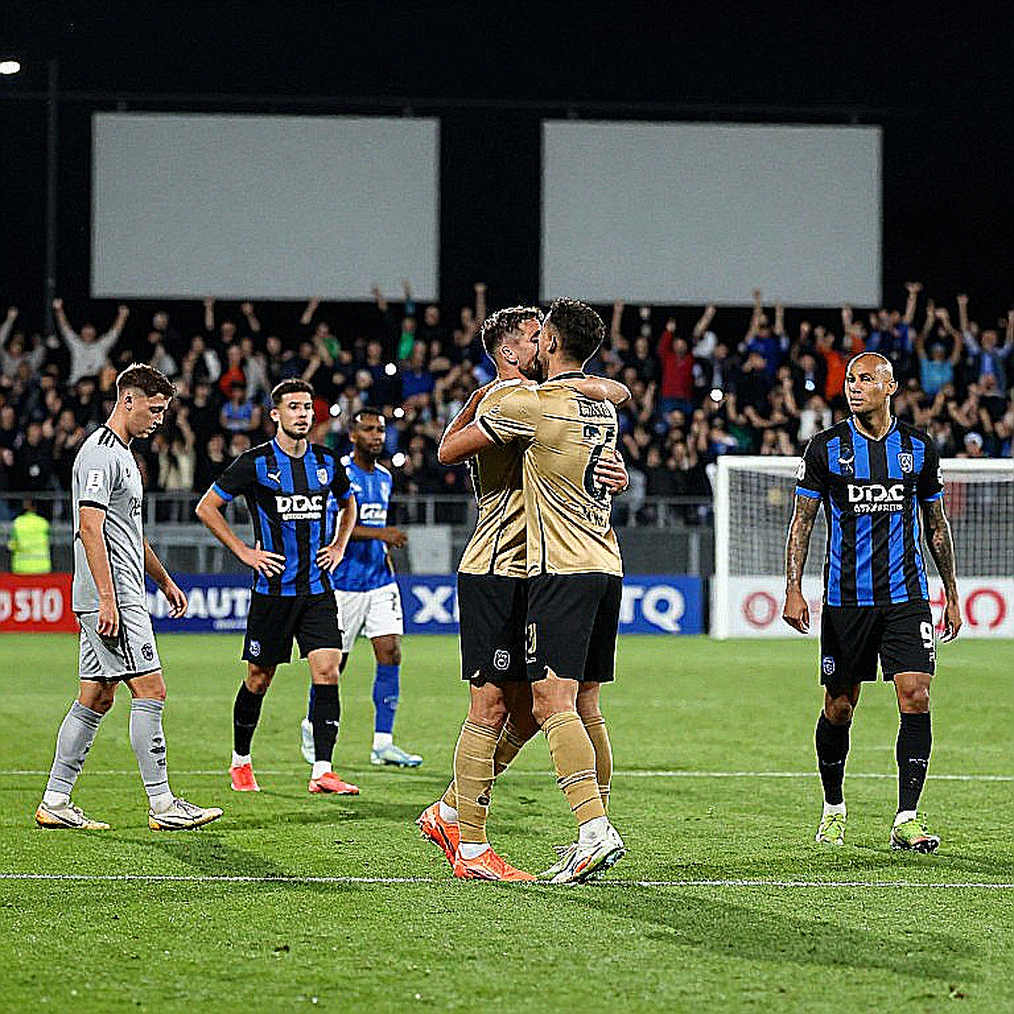
In the first half of an FA Cup tie in February, the public address system at Hull City's stadium asked supporters to stop discriminatory chanting. A few minutes later the chanting returned from a few blocks of the home crowd. The PA spoke a second time. The CCTV reminder followed, police were present, and arrests were made. By full time the scoreline had become the smallest part of the story: Hull City hosted Chelsea that day and lost.
It took months for the verdict to arrive. In September the Football Association announced that Hull City had been fined £30,000, equivalent to $40,512 at a rate of $1 = £0.7405, and that an independent regulatory commission had imposed an action plan. The club admitted the charges.
Read quickly, the story becomes one line: a club fined for its fans' chanting. That reading throws away almost all the weight of the case. The money is the cheapest part of the sentence. The expensive part sits in two words most readers skip: action plan.
The home club carries the liability
An FA Cup tie between a second-tier side and a Premier League side has its own risk structure. More tickets, more first-time visitors, a sharper atmosphere, and one club responsible for matchday operations: segregation, stewarding, cameras, PA announcements and police liaison. When discriminatory chanting is heard in sections of the home crowd, the home club inherits objective responsibility regardless of who sang or whether anyone was caught.
The charge did not target an individual. The FA was not judging a supporter; it was judging a club. The wording required the club to ensure its spectators, and anyone purporting to be supporters, do not use words or behaviour that is improper, offensive, abusive, indecent or insulting with a reference, express or implied, to sexual orientation.
This is a collective-liability rule. The club was not charged for the singing. It was charged for failing to prevent it. And there was a sharper edge: the club failed to prevent the chanting despite warnings over the public address system. That word "despite" is the hinge of the whole file. It turns a crowd incident into an organisational failure.
The gap between February and September looks like delay to outside observers. In England, investigation and adjudication are separated, and the verdict came from an independent regulatory commission. A multi-month gap is the ordinary rhythm of a system with separation of powers, and it is often lengthened by a club's own submissions. Hull City admitting the charges instead of contesting them closed the matter faster than any legal battle would have.
One small detail is worth noticing: the wire copy carried a currency footnote. Outlets add such notes when writing for an international readership, packaging the case as a tidy governance item rather than an investigation. That tidy packaging is exactly what makes readers elsewhere misjudge the weight of the sanction.
Two layers of one sentence
Layer one is money. Hull City operate at Championship level, with annual operating budgets and wage bills measured in tens of millions of pounds. A £30,000 fine is small change in that ledger, less than a week's wage for many mid-range players. It cannot touch cash flow and will never appear in a budget meeting.

Converted to Vietnamese dong, £30,000 lands near one billion dong at prevailing rates. In V.League, disciplinary tariffs for crowd offences are typically several times lower, often a few tens of millions of dong, sometimes with additional sporting penalties such as playing behind closed doors.
The principle that follows is one every football administrator should pin to the wall: converting fines across currencies to compare severity is a meaningless exercise. Severity must be measured as a share of the offending league's own operating scale. A fixed fine does not change behaviour; it merely prices the decision to keep behaving the same way. Once a club has absorbed the figure into annual costs, the price of repeating the offence is known.
Layer two is the action plan. An action plan is a compliance framework with milestones: staff training, stadium segregation procedures, a reporting mechanism for supporters, engagement with equality bodies, and periodic reporting back to the governing body. None of that is paid with a cheque. It is paid in staff hours, steward training, data systems and quarterly answers to the FA. Priced properly, compliance almost certainly costs more than the fine.
It also opens a monitoring window. Any similar incident inside that window becomes automatically aggravating, because the club has already been warned, already sanctioned, already committed to remediation. The sentence did not end in September. It began there.
The PA paradox
Conventional thinking treats a stadium announcement telling fans to stop as evidence of good faith. The club followed procedure: it warned, filmed, called police, and arrests were made. Why punish that?
Because in modern disciplinary law, an in-stadium announcement is not a prevention measure. It is evidence that the operator identified the problem early and still failed to stop it. Two PA announcements plus a CCTV reminder create a clear timeline: the club knew, the club warned, the chanting continued. What was missing was everything after the warning.
That is why the commission chose structural remediation rather than a purely financial hit. Once a file records a failure to prevent despite warnings, a compulsory action plan is the coherent governance answer. In modern disciplinary law, a public address announcement can become evidence against the party that made it.
Urawa 2026: same money, different nature
A Japanese precedent from the league I follow weekly shows how differently this can be handled. In March 2026, a banner reading "Japanese only" appeared at Saitama Stadium during a Urawa Reds match. The J.League imposed a heavy sanction: a fine of five million yen and one home fixture played behind fully closed doors, with no spectators admitted.
Converted, the two fines land in a comparable range. The nature of the punishment is not comparable at all. Urawa were hit in the stands: lost ticket revenue, lost atmosphere, lost visibility, and above all lost presence. For Japanese supporters, playing in an empty stadium is collective shame, and that shame is what forces fan groups to police themselves.
Hull City were hit in the administration: plan, reporting, process, training. That kind of sanction creates no shame, but it is persistent and quietly expensive.
Japan trusts social pressure first and rules second. England trusts process first and culture second. Both have blind spots. Closing a stadium punishes thousands of innocent people. An administrative plan can be completed on paper while the stands never change.
The right answer combines them: partial closure of the specific section where the behaviour occurred, ticket sales blocked by section and by group identity, plus a measurable action plan. That hits the wallet, the presence and the system at once.
Vietnam: a thin file creates no precedent
The problem in V.League is not that Vietnamese fans are worse than English or Japanese fans. The problem is that our disciplinary files are too thin to create precedent.
For years, crowd offences have been handled with a familiar formula: fine the home club, occasionally add a closed-doors fixture, occasionally remind the stadium operator. The real issues remain untouched: flares, regional hostility, abuse aimed at players and at vulnerable groups. Decisions differ case by case, and almost no published file is detailed enough to be cited as grounds for the next one.
A three-layer mechanism would help. First, fines set as a percentage of club revenue or operating budget instead of a fixed tariff everyone can predict. Second, an action plan with deadlines, specific deliverables and public periodic reporting. Third, sporting penalties escalating with repeat offences, beginning with partial stand closures.
A disciplinary ruling only becomes precedent when it is published in enough detail for others to cite. A three-paragraph press release is not precedent. It is news, it lives a few days and disappears, and next season everything restarts from zero.
Russia 2026 and the price of saying it plainly
I learned this lesson somewhere unexpected. In 2026 I was invited to commentate at the World Cup in Russia. Japan led Belgium 2-0 in the round of sixteen and lost 3-2. On air I said the failure to make changes at the seventieth minute amounted to self-sabotage. Social media erupted. I was called disrespectful toward a legend. My podcast audience rose forty per cent in three days. That night I sat in a bar with Japanese supporters, heard their anger, and then heard them concede the point.
The lesson: fans do not fear plain speaking. They fear being lied to. They fear a statement drafted to protect its author. They fear a published file of three lines that everyone knows is incomplete.
The same disease shows up in refereeing and VAR, where the absence of an in-stadium explanation mechanism leaves the paying supporter as the forgotten party. Transparency in professional football has been reduced to a slogan printed on advertising boards. Without a detailed explanation mechanism for the people who pay, transparency is just a backdrop.
In a transfer window, the disciplinary file is also an asset
We are in a transfer window, so the feeds are full of noise: rumours, agents, airport photographs, figures without sources. My position is unchanged: the transfer market is the saddest theatre in sport, where owners trade money for cowardice. But I read files like Hull City's before any transfer rumour, because that is what actually values a club.
A player is valued by goals. A club is valued by contracts: sponsorship, broadcast, commercial, most of which now contain clauses allowing partners to withdraw or reduce payment when reputational damage occurs. The report names no sponsor, so I will not speculate. But that is where Hull City's real exposure sits, not in £30,000 already accounted for.
Three scenarios
The central scenario matches what happened: fine plus action plan, club admits, no sporting sanction, no points deduction, no stand closure, file closed quietly.
The bad scenario: discriminatory chanting recurs inside the monitoring window. The aggravating factor is already on paper, and the commission has grounds for partial closure or a far wider plan.
The worst scenario: repeated incidents assessed as a systemic failure rather than a one-off. The story then moves from the stands to the boardroom, and the real risk becomes commercial clauses being triggered.
Where I could be wrong
I could be wrong in three ways. First, £30,000 plus a plan may be proportionate and sufficient. Second, Hull City may have done everything a stadium operator can do in ninety minutes; stopping two hundred people singing among twenty thousand is something even professional police often fail at. Third, the action plan may be pure paperwork, in which case this sentence is nothing but form and I have over-analysed a sheet of paper.
At sixty-eight I no longer chase trends; I set them and leave them behind. But I remember the lesson of 2026: never excuse a failure when the audience needs a straight punch in the face. If I am wrong about Hull City, I will say so in my own voice on the next episode.
A testable prediction
If another discriminatory chanting incident is recorded at Hull City within twelve months, the next sanction will not be £30,000 and a sporting penalty will appear. I also expect at least one comparable FA sanction in English football this season, because action plans are not designed to end a problem; they are designed to give the system data about it.
And if you chair a V.League club, here is the question I want answered: would you rather lose one stand for one match, or accept three years of quarterly reporting?