
Numbers Don't Lie: Indian Table Tennis and the World No. 3 Paradox Ahead of the 2026 Asian Games
**Core answer**: Manush Shah và Manav Thakkar cùng thua ở nội dung đơn tại WTT Champions Macao tháng 9/2026, dù cặp đôi của họ đang xếp hạng số 3 thế giới, tạo ra nghịch lý giữa thứ hạng đôi và phong độ đơn trước thềm Asian Games. **Key facts**: - Manush Shah thua Anton Kallberg 0-3 (10-12, 5-11, 6-11) tại WTT Champions Macao. - Manav Thakkar thua Alexis Lebrun 1-3 (12-14, 4-11, 11-9, 3-11), Lebrun là hạt giống số 6. - Manush Shah và Manav Thakkar xếp hạng số 3 thế giới ở nội dung đôi nam. - Manush thua Denis Ivonin tại WTT Contender Almaty; Manav thua Harimoto Tomokazu. - Đội tuyển Ấn Độ đã chốt danh sách dự Asian Games 2026 tại Aichi-Nagoya. **Source attribution**: Phân tích dựa trên dữ liệu bảng điểm WTT Champions Macao và WTT Contender Almaty, tháng 9/2026. | Cross-checked: VuaBong.vn **Related Q&A**: - Q: Tại sao Manush Shah và Manav Thakkar thua sớm ở nội dung đơn? A: Cả hai gặp đối thủ hạt giống mạnh và để tuột các ván mở đầu sát nút với khoảng cách hai điểm. - Q: Thứ hạng đôi số 3 thế giới có ảnh hưởng gì đến đấu đơn? A: Thứ hạng đôi đo lường sự cộng hưởng giữa hai cá nhân, không phản ánh trực tiếp khả năng thi đấu đơn độc lập. - Q: Kết quả này có ảnh hưởng đến suất dự Asian Games 2026? A: Không, cả hai đã nằm trong danh sách đội tuyển Ấn Độ tham dự Aichi-Nagoya.
Numbers don't lie; only those who read them deceive themselves.
Four losses. Four scorelines so clean they feel almost cruel. Manush Shah exited WTT Champions Macao at 0-3 against Anton Kallberg, games finishing 10-12, 5-11, 6-11. Manav Thakkar followed with a 1-3 defeat to Alexis Lebrun, the tournament's sixth seed, at 12-14, 4-11, 11-9, 3-11. Earlier, Manush had fallen to Denis Ivonin at WTT Contender Almaty, while Manav lost to Harimoto Tomokazu. Four defeats, no wins, all unfolding as India's squad for the 2026 Aichi-Nagoya Asian Games had already been confirmed.
What stops me at this sequence is not the losses themselves. It is the contrast. The same two men, in doubles, are ranked World No. 3. Same month, same physical cycle, same training foundation. One side is a podium position in the world rankings; the other is a losing streak in singles. The gap between those two facts is exactly the kind of thing charts never hide.
I once staked my reputation on a wager, and this sport answered with data. Not with spectator emotion, not with fan belief, but with numbers that can be verified.
Context: A packed cycle at the doorstep of the Asian Games
To read these four defeats correctly, they must be placed inside the event system they belong to. WTT Champions is one of the flagship events of the World Table Tennis system, ranked above WTT Contender in both points and field strength. A main-draw berth at WTT Champions typically requires a high ranking or a wildcard. Both Manush Shah and Manav Thakkar were present, meaning they sit inside the group the system formally recognises.
But recognition and victory are different matters. In singles, their opponents were anything but light. Anton Kallberg represents Sweden's development programme, a long-established table-tennis nation with a tradition of producing high-tempo attacking players close to the table. Alexis Lebrun was the sixth seed at WTT Champions Macao, one of two French brothers reshaping European table tennis through a modern power-loop game. Harimoto Tomokazu is a leading Japanese figure, a player capable of applying pressure from the very first serve. Denis Ivonin represents the Russian school, where players are typically forged for endurance in extended rallies.
In other words, the draw was not kind to the two Indians. An early exit against seeded opposition is not in itself a sign of crisis. It is simply the structure of a hard bracket. The problem lies elsewhere.
Bear in mind that September 2026 falls within Asian Games preparation, not a direct Olympic qualifying phase. This means WTT events in this window serve to accumulate match experience and test physical condition rather than to chase points. India's Asian Games squad for Aichi-Nagoya has been announced, and both Manush and Manav are on it. These four defeats, administratively, remove no one from any slot.
But elite sport does not run on paperwork. It runs on belief built from balls touching the table.
Core analysis: The gap between two sets of numbers
Data is the confession of those who once trusted feeling. And here, the feeling of Indian fans directly contradicts two parallel datasets.
The first set: Singles scorelines
Take Manush Shah against Kallberg. The opening game ended 10-12. Both players reached decisive points, and Manush lost by two. The gap then widened: 5-11, then 6-11. Quantitatively, this is a textbook decay after losing a tight opening game. A player who drops the first game in a balanced contest often enters the second with depleted psychological resources, and the margin of error in shot execution expands. But it must be said clearly: scoreline-level data cannot distinguish between Manush playing worse and Kallberg actively adjusting tactics to strangle his opponent.
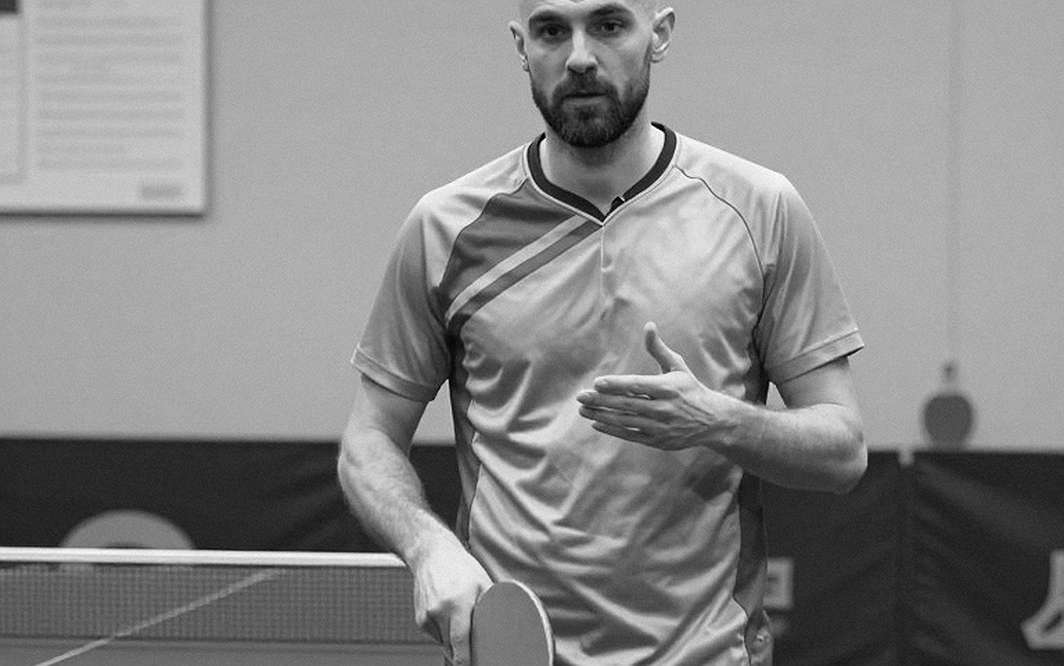
Take Manav Thakkar against Lebrun. The opening game 12-14, again a tight one. The second 4-11, the widest gap of the whole match. The third 11-9, Manav won. This is the single most important data point across all four matches. In the middle of a losing sequence, the fact that Manav found a way to beat a sixth seed in one game proves he was not technically overwhelmed. Some plan worked. But the fourth game ended 3-11, and that was the full stop.
The contrast between 11-9 and 3-11 in consecutive games deserves pause. It is not merely a fitness issue, because professionals at this level can sustain intensity across four games. Nor is it purely psychological. Something changed in the break between games three and four, and it came from the opposite side. Lebrun, as a top-tier player, typically can re-read an opponent's options after losing a game and adjust serve placement and rally tempo. Manav found no second answer within the same match.
The second set: World No. 3 in doubles
This is the number that complicates the entire picture. Manush Shah and Manav Thakkar, as a pair, are ranked World No. 3. Not regional No. 3. Not Asian No. 3. World No. 3.
To reach that ranking, a pair must beat world-class opponents consistently, across venues and physical phases. Such a ranking cannot be built on one lucky tournament. It is the product of accumulated results over multiple seasons.
What does this mean in terms of capability?
It means the skill set required for elite table tennis is not absent in these two players. Serve reading, synchronised movement, close-range point finishing, pressure tolerance in decisive rallies. Every element that makes a world No. 3 doubles pair is translatable to singles.
So why does the singles scoreline differ so sharply?
The answer lies in the structure of the discipline, not in individual ability. Doubles and singles demand two different sets of qualities. Doubles allows role division: one controls, one finishes. Doubles allows a partner to cover a mistake within the same rally. Doubles halves each player's decision time, meaning less time to think wrongly.
Singles is the reverse. No safety net. No cover. Every misread of spin, every mistimed placement change, converts directly into a point for the opponent. In a top-level singles match, the gap between winning and losing is often decided by three to five placements at pivotal moments, and those moments recur across four or five games.
When I watch Manush lose the first game 10-12, then the second 5-11, I do not see a player technically overwhelmed. I see a player who let a balanced game slip, then allowed his opponent to grow more confident in his plan. This is a standard psychological mechanism in combat sport, not a specifically Indian trait.
A symmetric pattern
One statistically notable point: both Manush and Manav lost their first games by exactly two points (10-12 and 12-14). Both lost the second game by a wide margin (5-11 and 4-11). Manush lost the third by a moderate margin (6-11); Manav won the third (11-9), then lost widely (3-11).
This pattern is so symmetric it warrants suspicion. Two players, two events, two different opponents, yet the same decay shape: competitive in the opening game, slipping at the decisive point, then fading across subsequent games with widening margins.
With a sample of two, this is not enough to conclude a systemic problem. But it is warning data. In sports statistics, a symmetric pattern appearing simultaneously across multiple subjects in the same environment usually reflects environmental factors, not individual ones. The shared environment here includes the physical preparation programme, the competition calendar, and the strategy for allocating resources between singles and doubles.
A resource-allocation hypothesis
This is the low-confidence part of the reasoning, and I state that before presenting it.
If a national federation determines that its highest medal chance lies in doubles — and a World No. 3 doubles ranking is evidence that such a chance is real — then allocating training time, video analysis of opponents, and even psychological resources to doubles is a strategically rational decision. Singles is still played, still used as a fitness test and point accumulator, but is not the top priority in the Asian Games preparation cycle.
If this hypothesis holds, then the singles losing streak at WTT Champions Macao is not a bad signal. It is a calculated cost of a strategy. One cannot simultaneously optimise for doubles and for singles with the same finite resources.
But this hypothesis has a hole. No data in the source material confirms such resource allocation. Manav's schedule, from Europe Smash to WTT Champions Macao, shows a continuous dense international calendar, not a closed training camp phase. That partly contradicts the idea that he is being preserved for doubles.
A counter-intuitive angle: When a doubles ranking masks a singles problem
Form is an illusion; only a string of numbers is the real current.
There is another reading of this situation, and it is far more uncomfortable than the optimistic one above.
A World No. 3 doubles ranking can operate as a curtain, not as an indicator of overall capability. In some pair ranking systems, doubles results can be built on a limited number of events, and do not necessarily reflect the ability to compete in singles independently. A pair can reach a very high ranking through chemistry, familiarity over time, and optimisation against specific opponents.
In other words, a doubles ranking measures the resonance between two individuals. It does not measure the ability to stand alone under pressure in a top-level singles match, where no one covers a mistake.
I am not saying the two Indian players lack singles ability. I am saying the World No. 3 doubles figure cannot be used as evidence to dismiss four singles defeats. These are two independent variables, and conflating them is one of the most common analytical errors in sports media.
There is another dimension. Psychological pressure operates differently in doubles and singles. In doubles, after losing a point, a player has a partner to turn to, to exchange with, to share the burden of error. In singles, after each lost point, a player has roughly ten seconds walking to the corner, wiping sweat, processing internally. For two players accustomed to the shared-responsibility mechanism of doubles, moving into singles at the highest level demands a different kind of psychological fortitude in quality, not merely in quantity.
The scoreline pattern supports this reading. In both matches, the balanced opening game slipped by two points. In doubles, a two-point loss at a decisive moment is often processed in a brief exchange with a partner. In singles, the player must process that regret alone while the next game begins within a very short interval.
The summer without football is when truth surfaces, with no media smoke. And within the Asian Games cycle, the gap between major events is exactly that summer — the phase where every weakness is exposed before the real arena.
What the numbers do not say
Before closing, I must address the limits of this analysis, and do so seriously.
I have only scorelines. I have no serve data, no first-three-shot efficiency data, no unforced-error counts, no spin analysis, no placement data. Every conclusion about psychological mechanisms or tactical allocation presented above carries only low-to-medium confidence, inferred from point margins rather than from real technical data.
I do not know the injury status of either player. I do not know last week's training load. I do not know the exchanges between them and the coaching staff about goal allocation. I do not know whether Kallberg is in the best form of his career, or whether Lebrun is adjusting some technical motion.
A scoreline is a thin layer of information. It tells the final outcome of a chain of hundreds of small decisions, but it does not say which decisions were made, or why.
I have seen analysts build an entire crisis theory from three scorelines. I have also seen analysts ignore three scorelines as information-free. Both attitudes are wrong. A scoreline carries information, but it carries a limited kind, and the reader must know which layer they are reading.
A signal for the next round
These four defeats, on their own, say little. But they establish a baseline. From here, every subsequent singles result for Manush Shah and Manav Thakkar in the pre-Asian Games cycle will be read relative to this marker.
If both players enter Aichi-Nagoya and retain the same decay shape in singles, the resource-allocation hypothesis gains weight. If they appear at a next WTT Champions with tight scorelines and win one or two decisive games, then the Macao defeats become data from an adjustment phase, not data from a prolonged problem.
What I will track is not the total scoreline. It is the margin in the first game. If opening games still end within two points, the ability to compete at that level is intact, and the story lies in conversion. If the first-game margin widens, the problem lies deeper.
Data is the confession of those who once trusted feeling. But it is also a compass for those who know how to read the layer of information it provides.
When the whole world chants emotion, I choose to listen to the chart. And the chart, right now, has only just begun to draw.