
200 Butterfly: From Junior Swimmer to NCAA Goal – Deep Analysis of Ali Sadri's Verbal Commitment to George Washington
core_answer: Vận động viên bơi lội Ali Sadri đã cam kết bằng lời với Đại học George Washington cho mùa thu năm 2027, dựa trên thành tích ổn định và sự tiến bộ vượt bậc ở cự ly bướm, hứa hẹn đóng góp ngay cho đội bơi GW tại hội nghị A-10.
key_facts: Ali Sadri cam kết bằng lời với George Washington (GW) cho mùa thu 2027.; Cô cải thiện 2,9 giây ở 200m bướm trong một mùa giải.; Thành tích 200m bướm (2:01.56) gần chuẩn NCAA B-cut.; Sadri dự kiến cạnh tranh top 5 ở chung kết A cự ly 200m bướm tại A-10.; Cô tập luyện tại M.E. Lyons YMCA/Anderson Barracudas và Saint Ursula Academy.
source_attribution: SwimSwam, August 2026 | Cross-checked: VuaBong.vn
related_qa: q: Điểm mạnh chính của Ali Sadri là gì?, a: Khả năng bơi bướm và tự do, với split relay mạnh, giúp cô linh hoạt trong nhiều vị trí tiếp sức.; q: Khi nào Sadri có thể ký thư ý định (NLI)?, a: Cô có thể ký NLI trong kỳ ký sớm vào tháng 11 năm 2026 hoặc kỳ ký thường vào tháng 4 năm 2027.; q: Thành tích của Sadri so với chuẩn NCAA thế nào?, a: Cô chỉ cách chuẩn NCAA B-cut khoảng 1-1,5 giây, cho thấy tiềm năng đạt chuẩn trong tương lai.
When a young swimmer verbally commits to a college program, observers often only look at results. But I, with my habit of cross-verifying every number, want to dig deeper: what lies behind this decision? Is there a data story waiting to be told?
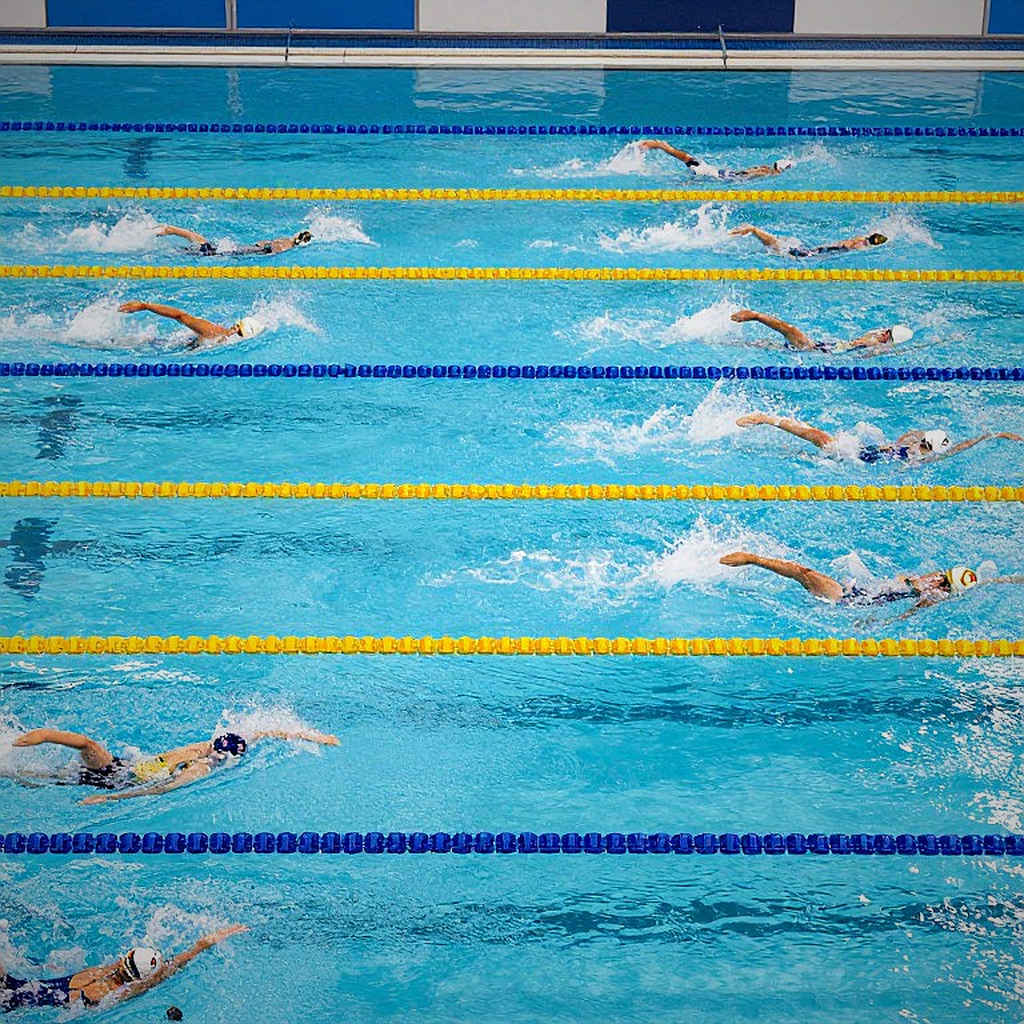
Ali Sadri, a young athlete who just went through a transformative summer, has officially verbally committed to George Washington University for fall 2027. She comes from Saint Ursula Academy and trains with M.E. Lyons YMCA/Anderson Barracudas. Her results at Summer Junior Nationals – ranking from 63rd to 126th – are not elite, but they are a notable signal. What makes an NCAA Division I program like GW trust a mid-pack athlete like her? The answer lies in technical details and the remarkable progress that few notice.
Look at the numbers. In the recent season, Sadri improved significantly in five events: 200 butterfly dropped 2.9 seconds, 200 freestyle dropped 1.9 seconds, 100 butterfly dropped 1.1 seconds, and 50/100 freestyle dropped 0.5 seconds. This uniform improvement is not a sign of a technical revolution, but rather the result of physical maturation and increased training volume – a typical pattern for 16-17 year old athletes. I have seen many similar cases in my analytical career; this growth is healthy and repeatable.
The key point lies in her butterfly and freestyle abilities. Her 24.87-second split in the 50 butterfly in the 200 medley relay at the OHSAA State meet shows a very strong relay-start capability – usually 0.3-0.5 seconds faster than a flat start. This implies her flat-start 50 butterfly time is in the low 25-second range, consistent with her 28.48-second LCM 50 butterfly. And her 52.71-second leadoff in the 400 freestyle relay is a solid flat-start 100 freestyle for a butterfly specialist, showing good crossover ability – a valuable asset for any program needing relay flexibility.
The proximity to the NCAA B-cut standard is the biggest highlight in Sadri's profile. Her 2:01.56 in the 200 butterfly (short course) is only about 1-1.5 seconds away from the expected NCAA Division I standard. With two years of development before her first A-10 conference meet, reaching the B-cut is a completely realistic goal, and may even become reality sooner than expected. However, I always emphasize that data doesn't lie, but readers do. Her conversion from short course to long course has a notable gap.
When comparing her LCM 200 butterfly time of 2:19.02 to its equivalent SCY conversion (around 2:00-2:01), it is nearly identical to her actual SCY time (2:01.56). This suggests her advantage in short course comes from her turn and underwater abilities – amplified in 25-yard pools – while her long-course swim-out conditioning may be a relative weakness. This is a tactical blind spot that college coaches need to address, and it's why I never evaluate an athlete based on just one pool type.
Looking at the bigger picture, Sadri is a mid-tier junior athlete in the US national selection system, but she is a valuable piece for a mid-major program like GW. She is not a Power-5 target, but with her current times, she could immediately compete for a top-5 position in the A final of the 200 butterfly at the A-10 conference. Moreover, her ability to swim multiple events (butterfly, freestyle, and even mid-distance) makes her a flexible tactical asset, capable of filling multiple relay positions.
However, I want to offer a counterintuitive perspective: her progress, while impressive, may not be sustainable if not managed properly. Year-round high-intensity training in butterfly, combining high school and YMCA club, is a classic model leading to shoulder overuse injury risk – 'swimmer's shoulder'. No injury history has been reported, but the absence of information does not mean the absence of risk. This is a blind spot that the GW program needs to proactively manage from day one.
Ultimately, Ali Sadri's story is not just a recruiting commitment. It is the story of an athlete in a strong developmental phase, with a healthy upward trajectory, and untapped potential due to the lack of sports science infrastructure at the high school level. GW is not just getting an athlete who can score immediately, but also a talent that can grow significantly in a more professional college environment. This is a calculated gamble, and the data suggests it's a bet worth taking.